Traitement thermique infrarouge précis pour la fabrication de produits électroniques et de produits électroniques imprimés
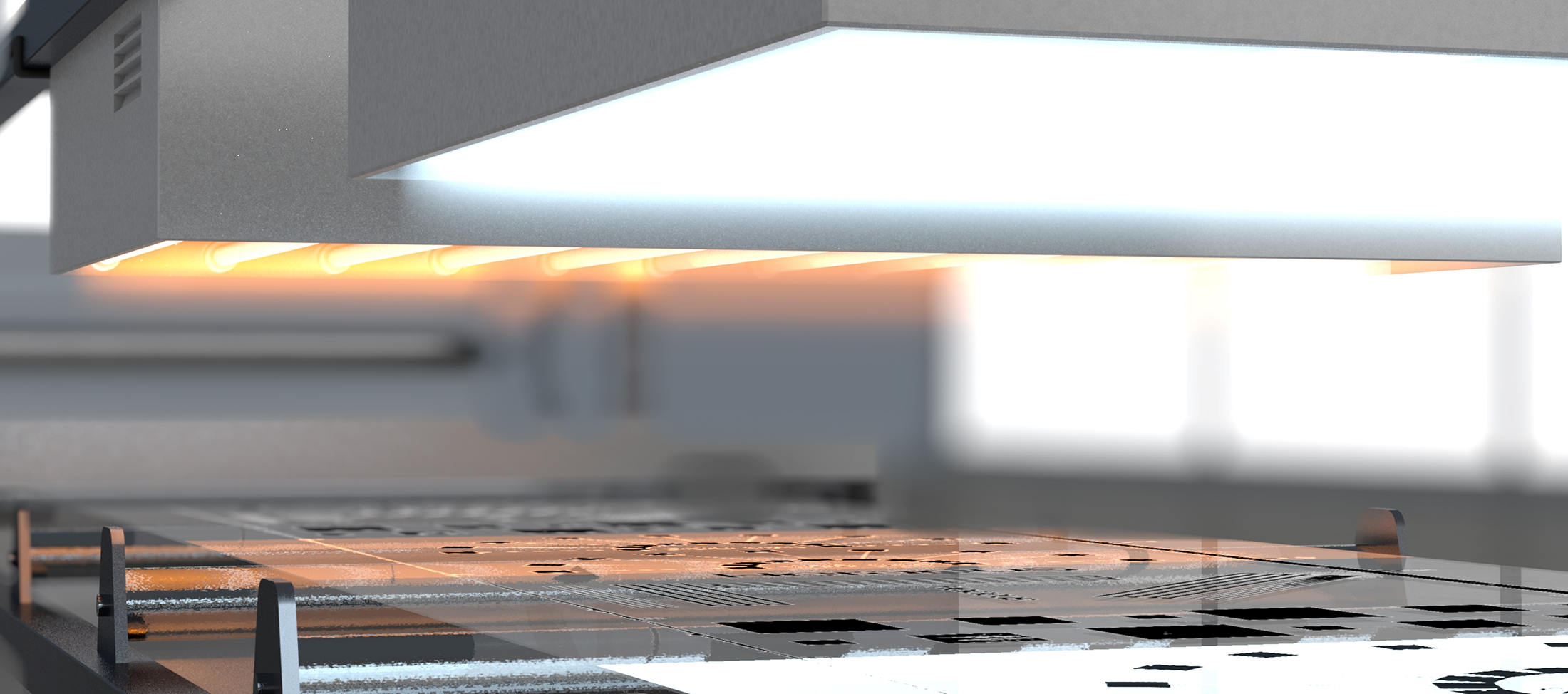
De l’électronique automobile aux procédés de fabrication de semi-conducteurs, comme le dépôt de couches atomiques, le chauffage des composants électroniques tout au long de la production nécessite une gestion précise, uniforme et contrôlée de la température. La technologie infrarouge transfère des niveaux élevés d’énergie sans contact physique, ce qui la rend idéale pour le traitement thermique sous vide et dans d’autres environnements de fabrication exigeants.
Avec des temps de réponse de quelques secondes seulement, les émetteurs infrarouges assurent un contrôle rapide et précis de la température tout en améliorant l’efficacité des procédés. Ils conviennent également très bien au séchage et au durcissement des revêtements protecteurs, des adhésifs et des matériaux d’encapsulation utilisés dans les assemblages électroniques, réduisant souvent les temps de traitement par rapport au chauffage par convection classique.

Chauffage infrarouge pour un dépôt de couches atomiques (ALD) efficace
L’ALD est un procédé essentiel utilisé dans la fabrication de semi-conducteurs et la production de nanomatériaux. Ce procédé chimique en phase gazeuse dépose des films ultraminces par exposition répétée à des matériaux précurseurs. Selon l’application, le chauffage infrarouge peut fournir l’énergie thermique nécessaire pour amorcer ou améliorer le procédé de dépôt tout en permettant un contrôle précis de la température.
Préchauffage infrarouge pour l’encapsulation de composants électroniques en silicone
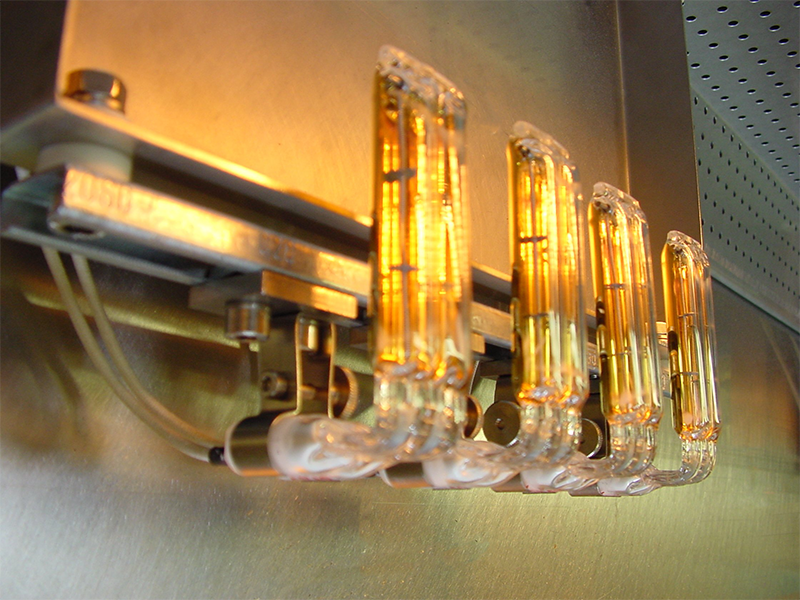
Les matériaux d’encapsulation en silicone sont largement utilisés, particulièrement dans l’industrie automobile, pour protéger les composants électroniques contre l’humidité, la poussière, les embruns salins et les vibrations.
Le préchauffage des composants avant le surmoulage contribue à maintenir l’écoulement du matériau pendant le procédé de moulage. Les systèmes de chauffage infrarouge réagissent beaucoup plus rapidement que les systèmes classiques à air chaud, ce qui permet un contrôle précis de la température pouvant être facilement synchronisé avec les procédés de fabrication automatisés assistés par robot.
Chauffage de précision pour les composants électroniques
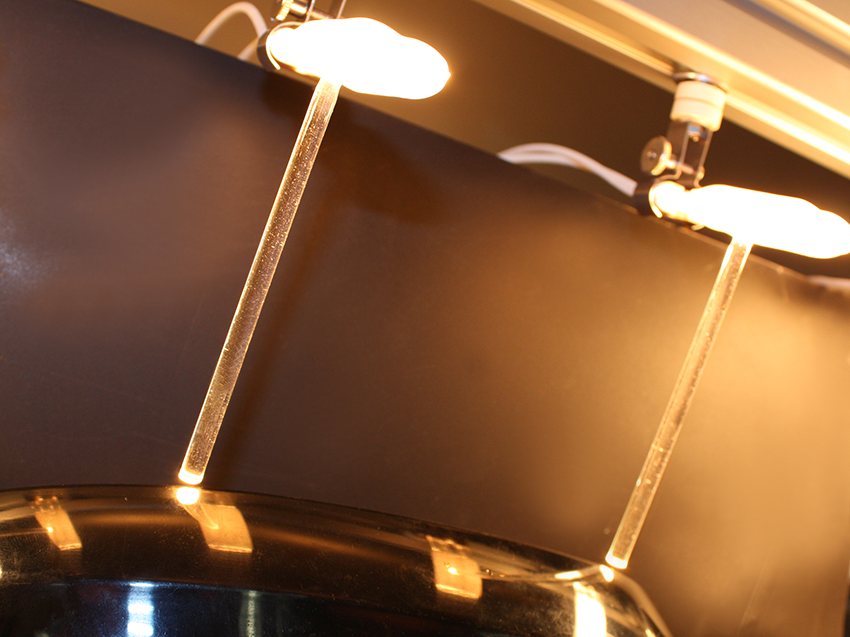
Le rivetage de composants électroniques à l’intérieur de boîtiers en plastique peut être difficile lorsque l’accès est limité en raison d’espaces restreints. Les émetteurs infrarouges ponctuels assurent un chauffage hautement ciblé et sans contact directement sur les rivets, permettant un assemblage automatisé fiable tout en réduisant les rebuts. Contrairement aux méthodes de chauffage par contact, la technologie infrarouge élimine le risque que le plastique fondu adhère à l’outillage chauffé et contribue à protéger les composants électroniques environnants et les surfaces revêtues contre les dommages thermiques inutiles.
Séchage et frittage de produits électroniques imprimés
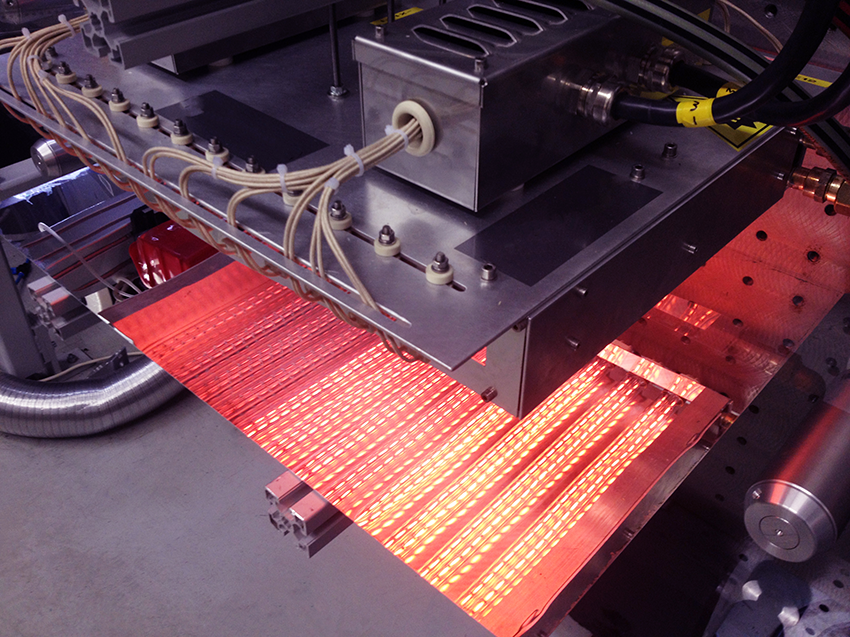
La fabrication de produits électroniques imprimés nécessite des solutions efficaces pour le séchage des impressions, le durcissement des encres conductrices et le frittage des encres conductrices afin d’obtenir une qualité de produit et une efficacité de fabrication constantes.
Noblelight, qui fait maintenant partie d’Excelitas, a développé des procédés infrarouges pour le post-traitement des applications d’impression bobine à bobine. Des recherches approfondies, des essais d’application et des simulations numériques informatiques avancées ont été utilisés pour élaborer et valider des solutions optimales pour les utilisateurs finaux. Les simulations de lancer de rayons optimisent davantage la géométrie du système, garantissant que chaque solution est adaptée à l’application particulière pour assurer une performance fiable et efficace du procédé.