Dual-Element Pyro Detectors
Excelitas Dual-Element Pyro Detectors are well established as the performance standard in motion detection. Our design features two sensing elements connected to each other in reverse polarity to provide an AC-signal with motion and common mode rejection for non-moving radiation. Specify various window sizes to meet desired fields-of-view. Our Dual-Element Pyro Detectors cover the advanced family of DigiPyros, including our Low-Power DigiPyros for battery-operated motion detection.
See Related Content below for a technical introductory video to the extensive line of Excelitas Pyroelectric Sensors for motion detection.
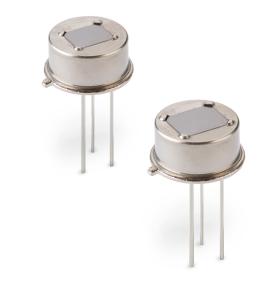
Low-Power DigiPyro Dual-Element Detector PYD 1588, PYD 1598
With a mere 1.8V power requirement, Excelitas offers the first real low-power enhanced DigiPyro® Series. The PYD 1588 and PYD 1598 DigiPyros are fully integrated, Dual-Element Detectors with two different window size options. These DigiPyros offer added features and low-current power...
Read More
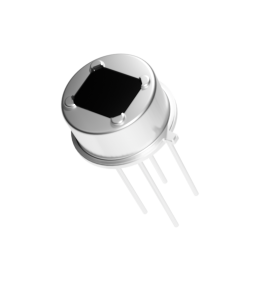
Ultra-Low-Power DigiPyro Lead-free Dual-Element Detector PYD 2597
The Excelitas ultra-low-power DigiPyro® PYD 2597 detector operates at just 1.4 V. This fully integrated, two-element pyro detector is made from RoHS-compliant materials and is designed to maximize battery life, making it suitable for remote motion-detection applications. Featuring...
Read More
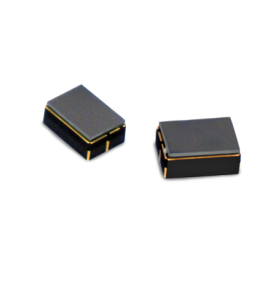
Low-Power DigiPyro Dual-Element Detector SMD PYD 2592
This Dual-Element Pyrodetector features two standard elements in parallel connection designed into a compact SMD (surface mount) housing with optical window. In alignment with our innovative low power DigiPyro detectors family, this design streamlines integration to the host system with...
Read More
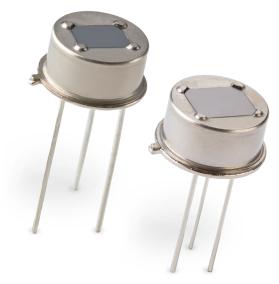
DigiPyro Dual-Element Detector PYD 1788, PYD 1798
The NEWLY IMPROVED PYD 1798/1788 is now re-engineered for improved energy efficiency of a mere 1.8V at 5µA power requirement, making it an ideal motion detection sensor for extended service life in mobile and remote battery-operated devices. Both of these Excelitas Dual-Element Pyrodetectors feature...
Read More
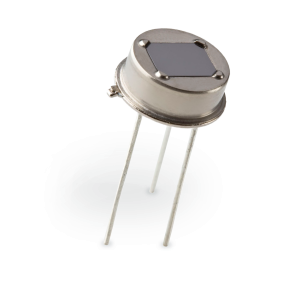
DigiPyro low profile Dual-Element Detector PYD 1794
The PYD 1794 Dual-Element Digipyro Detector features two elements in series connection in the low-profile TO-39 Metal Housing with optical window. This Detector is part of the Excelitas DigiPyro family that feature internal integrated circuitry to convert the element signals into a 14-bit digital...
Read More
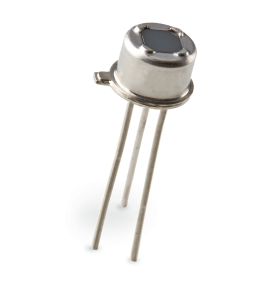
DigiPyro Miniature Dual-Element Detector PYD 5731
With the diameter of 4.7mm the PYD 5731 Miniature, Dual-Element DigiPyro® is one of the smallest designs in the Excelitas Pyrodetector portfolio. The PYD 5731 features two elements in a series connection within TO-46 Metal Housing and an optical window. This Detector is part of the...
Read More
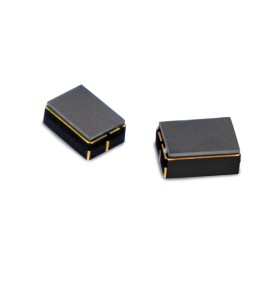
DigiPyro SMD Dual-Element Detector PYD 2792
The latest addition to our DigiPyro® Detector offering, this Dual-Element Pyrodetector features two standard elements in parallel connection designed into a compact SMD (surface mount) housing with optical window. In alignment with our innovative DigiPyro detectors family, this...
Read More
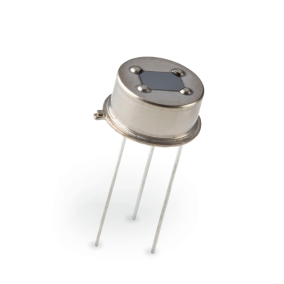
PYD 1378 Low Cost Dual-Element Pyro
The Excelitas PYD 1378 Dual-Element Pyrodetector (replacement to the LHi 778) features two elements in series connection with FET in-source follower circuit, integrated into a TO-5 metal housing with a small optical window.
Read More
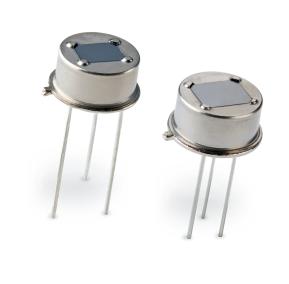
Analog EMI Dual-Element Detector PYD 1388, PYD 1398
This Pyrodetector Series represents Excelitas standard analog Pyrodetector offering. Our PYD 1388 (replacement to LHi 878) and PYD 1398 (replacement to LHi 968) Dual-Element Pyrodetectors feature two elements configured in a series connection with an FET in source-follower circuit. They are...
Read More
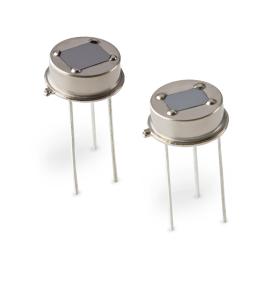
Analog EMI low profile Dual-Element Detector PYD 1384, PYD 1394
The Excelitas PYD 1384 (replacement to LHi 874) / PYD 1394 (replacement to LHi 944) Pyrodetector Series is the Low-Profile variant of the PYD 1388/PYD 1398 Standard Analog Pyrodetectors. The Low-Profile, Dual-Element Pyrodetectors feature two sensing elements in series connection and FET in source...
Read More