Glan-Thompson Prism Polarizers
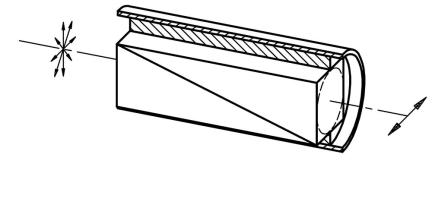
The LINOS® Glan-Thompson Prism Polarizer is a high-precision optical component designed for applications demanding exceptional polarization control. It consists of two cemented calcite prisms with their optical axes aligned parallel to their hypotenuse faces, resulting in extremely high extinction ratios over most of the aperture. Compared to Glan-Taylor prisms, it offers larger angular fields, symmetrically distributed about the prism assembly axis, while maintaining virtually no deviation of the extraordinary ray.
The mounted design fits seamlessly into Microbench systems, providing robust handling and easy integration in laboratory setups. Uncoated surfaces ensure broadband transmission with minimal absorption, preserving beam quality across the visible spectrum. With extinction ratios up to one million to one, the Glan-Thompson Polarizer is ideal for high-precision polarimetry, interferometry, laser systems, and other demanding optical experiments where maximal polarization purity, wide angular acceptance, and optical stability are critical.
| Product | Glan-Thom. Pol. Prism A; D=8 | Glan-Thom. Pol. Prism S; D=8 |
| Length | 25.4 mm | 25.4 mm |
| Shape | Circular | |
| Substrate | Calcite | Calcite |
| Clear aperture | Ø 8.0 mm | Ø 8.0 mm |
| Wavelength Range | 350.0 - 2300.0 nm | 350.0 - 2300.0 nm |
| Minimum Extinction Ratio Tp/Ts at design wavelength | 1.0 - 100000.0 | 1.0 - 1000000.0 |
| Flatness (λ) | 1/4 | 1/4 |
| Coating Specification | Uncoated | Uncoated |
| Part Number | G033217000 | G033219000 |
Made of two cemented calcite prisms with optical axes aligned parallel to the hypotenuse faces for efficient linear polarization
Extremely high extinction ratio over ~2/3 of the clear aperture for strong polarization contrast
Larger angular acceptance than Glan-Taylor prisms, with a symmetric usable angular field (±14°–16°) around the prism axis for easier beam alignment
Virtually no deviation of the extraordinary ray, ensuring high-precision beam propagation
Uncoated calcite construction with broad transmission range from 350–2300 nm, suitable for visible and near-IR applications
Wavelength-dependent transmission (uncoated): ~35–40% at 350 nm, 65–70% at 400 nm, and 80–88% beyond 500 nm for high efficiency in the visible and IR
High laser damage threshold (CW: 1 W/cm², pulsed: 5 W/cm²) for use in demanding laser applications
Optical surface quality 40–20 scratch-dig ensures low scattering and stable beam quality
Surface flatness of λ/4 @ 633 nm across the clear aperture for accurate wavefront preservation
Mounted design compatible with Microbench systems for straightforward mechanical integration
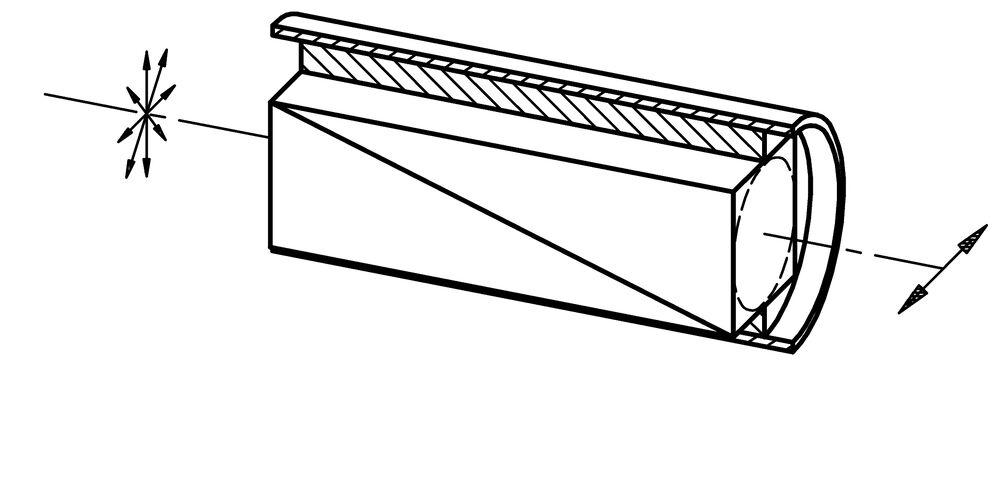
Glan-Thompson Prism Polarizers
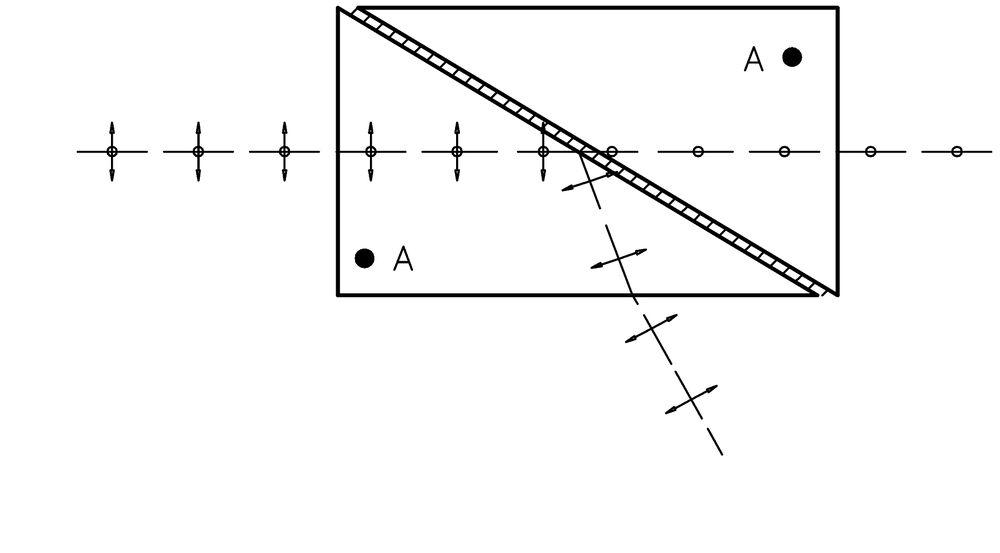
Glan-Thompson Prism Polarizer
| Product | Glan-Thom. Pol. Prism A; D=8 | Glan-Thom. Pol. Prism S; D=8 |
| Length | 25.4 mm | 25.4 mm |
| Shape | Circular | |
| Substrate | Calcite | Calcite |
| Clear aperture | Ø 8.0 mm | Ø 8.0 mm |
| Wavelength Range | 350.0 - 2300.0 nm | 350.0 - 2300.0 nm |
| Minimum Extinction Ratio Tp/Ts at design wavelength | 1.0 - 100000.0 | 1.0 - 1000000.0 |
| Flatness (λ) | 1/4 | 1/4 |
| Coating Specification | Uncoated | Uncoated |
| Part Number | G033217000 | G033219000 |
Made of two cemented calcite prisms with optical axes aligned parallel to the hypotenuse faces for efficient linear polarization
Extremely high extinction ratio over ~2/3 of the clear aperture for strong polarization contrast
Larger angular acceptance than Glan-Taylor prisms, with a symmetric usable angular field (±14°–16°) around the prism axis for easier beam alignment
Virtually no deviation of the extraordinary ray, ensuring high-precision beam propagation
Uncoated calcite construction with broad transmission range from 350–2300 nm, suitable for visible and near-IR applications
Wavelength-dependent transmission (uncoated): ~35–40% at 350 nm, 65–70% at 400 nm, and 80–88% beyond 500 nm for high efficiency in the visible and IR
High laser damage threshold (CW: 1 W/cm², pulsed: 5 W/cm²) for use in demanding laser applications
Optical surface quality 40–20 scratch-dig ensures low scattering and stable beam quality
Surface flatness of λ/4 @ 633 nm across the clear aperture for accurate wavefront preservation
Mounted design compatible with Microbench systems for straightforward mechanical integration
Glan-Thompson Prism Polarizers
Glan-Thompson Prism Polarizer