Fusion UV Dichroic Reflectors
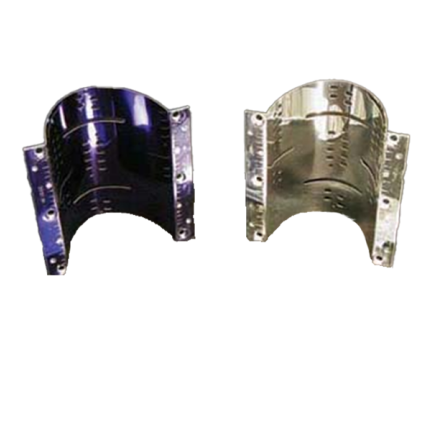
Dichroic reflectors are ideal for UV curing processes on heat-sensitive substrates as they minimize heat reflection onto the substrate. These reflectors can easily retrofit into existing Fusion UV microwave-powered irradiators or be used in new UV curing systems. Learn more about this solution.
Dichroic reflectors are exactly the same dimensions as a conventional reflector in Fusion UV microwave-powered UV curing systems, but have 50 or more dielectric coating layers applied to their surface. This coating reflects the UV, but absorbs much of the longer infrared (IR) wavelengths. This IR heat then dissipates from the reflector surface by air-cooling. Our reflectors are available as Standard Dichroic and Dichroic Plus versions.
Lamps contain mercury. Manage in accordance with local, state or federal disposal laws.
- 50 or more layers of dielectric coating on reflector surface absorbs IR energy
- Identical dimensions to standard UV curing system reflector
- Standard Dichroic Reflector: designed primarily for use with "D" bulb, inks, and some comparatively slow processes.
- Dichroic Plus Reflector: provides enhanced reflectance in the UVC band (200-260nm) for improved surface cure typically with "H" bulbs
- Improves product quality of heat sensitive substrates such as electronic components, plastic films and medical device components
- Significantly reduces heat onto the substrate during UV curing
- Easily retrofits into Fusion UV microwave-powered UV curing system irradiators
- Plastic decorating and coating
- Converting coatings
- Medical device marking and coating
- Electronic component
- Optical coatings
- Automotive in-mold decoration (IMD)
- 50 or more layers of dielectric coating on reflector surface absorbs IR energy
- Identical dimensions to standard UV curing system reflector
- Standard Dichroic Reflector: designed primarily for use with "D" bulb, inks, and some comparatively slow processes.
- Dichroic Plus Reflector: provides enhanced reflectance in the UVC band (200-260nm) for improved surface cure typically with "H" bulbs
- Improves product quality of heat sensitive substrates such as electronic components, plastic films and medical device components
- Significantly reduces heat onto the substrate during UV curing
- Easily retrofits into Fusion UV microwave-powered UV curing system irradiators
- Plastic decorating and coating
- Converting coatings
- Medical device marking and coating
- Electronic component
- Optical coatings
- Automotive in-mold decoration (IMD)
Subscribe Now!
Floating Web Forms block
Stay up to date with the latest advancements in UV curing. Join our newsletter for early access to application notes, expert webinars, featured articles, videos, product innovations, upcoming events, and more.
Floating Web Forms block

Additional Resources
Fusion UV Dichroic Reflectors are specialized optical components used in UV curing systems to enhance the performance and efficiency of the curing process. They are designed to reflect ultraviolet (UV) wavelengths while absorbing much of the visible light and infrared (IR) energy. This selective reflection improves UV curing output while helping to reduce excess heat near the substrate.
By filtering out visible and IR radiation, dichroic reflectors help direct only the usable UV light onto the target surface. This results in higher UV intensity at the cure site and reduces the thermal load on temperature-sensitive substrates like optical fibers, plastics, electronics and specialty coatings. The reduced heat buildup also contributes to greater system stability and more consistent curing across longer runs.
These reflectors are often used in Excelitas’ full elliptical UV curing systems, particularly within the F10T2 light shield assembly, for fiber optic applications. They are also used in Fusion UV microwave-powered UV curing systems such as the F Series and LightHammer Series for UV curing heat sensitive substrates.
Fusion UV Dichroic Reflectors offer several performance and operational benefits in UV curing systems.
- Improved UV Efficiency: Dichroic reflectors concentrate usable curing energy on the target area. This leads to more efficient polymerization of UV-reactive coatings and adhesives.
- Reduced Thermal Load: These reflectors significantly reduce substrate heating. This is critical in processes involving plastic substrates, coated wires, sensitive electronics or thin films that can warp or degrade under thermal stress.
- Longer System Life: By controlling excess heat, dichroic reflectors help protect system components like quartz tubes, reflectors, and light shields. Reduced thermal cycling and cooler operating conditions extend the service life of those parts.
- Consistent Process Results: Stable thermal conditions lead to more uniform UV dose delivery. This reduces variability in cure depth, adhesion, or surface finish, especially in continuous, high-speed manufacturing lines.
- Cleaner Cure Zone: Less heat means fewer vaporized contaminants or coating breakdowns near the lamp and reflector surfaces. This helps maintain optical clarity, reduces the need for frequent cleaning, and minimizes downtime.
Yes. UV curing systems that use dichroic reflectors contribute to lower emissions and cleaner working environments by minimizing the need for heat-intensive curing or solvent-based coatings.
Dichroic reflectors are the exact dimensions of our standard reflectors to fit into all Fusion UV microwave-powered UV curing systems. They require similar cleaning and inspection as the standard reflectors.